I still remember the first time I tried to make kimchi fried rice. I was so excited, my pan was screaming hot, and I had just finished cooking a fresh pot of rice. I tossed everything in, imagining those crispy, caramelized bites I’d seen in countless videos. What I got instead was a sad, gloppy pile that stuck to the pan like cement. The rice had turned into a soft, sticky paste, and the whole thing felt more like porridge than fried rice. It was a total bummer, and I almost gave up right then. But that failure taught me the single most important lesson about this dish: the biggest kimchi fried rice mistake to avoid is using freshly cooked rice. Day-old rice is the only way to get those perfect, crispy, chewy bits that make this dish so addictive.
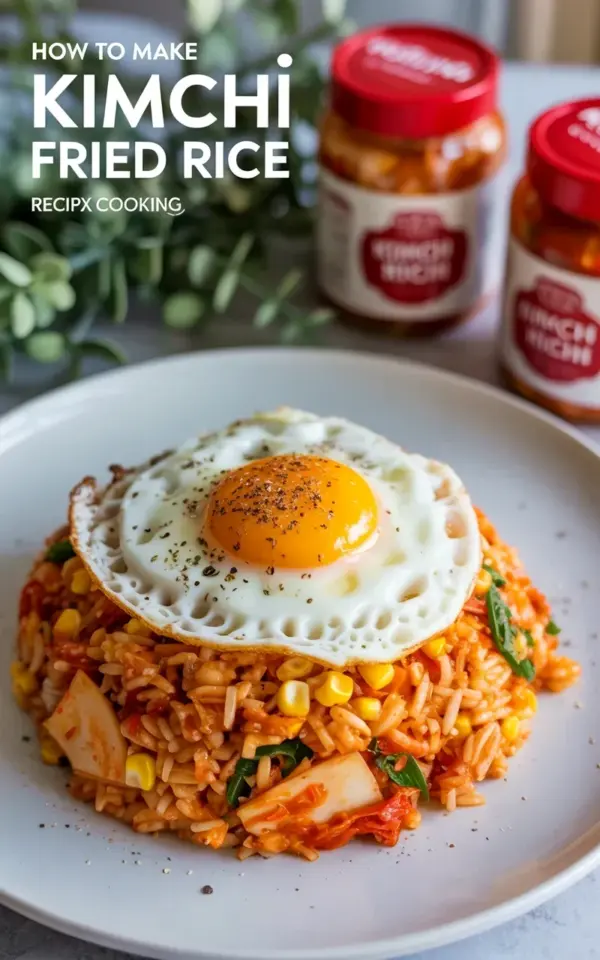
Okay so, for the longest time, I didn’t get why my rice was always so mushy. I was doing everything else right, using good kimchi, cranking the heat, and I even had a beautiful sunny-side-up egg ready to go, just like the photo you always see. That bright yellow yolk sitting on a mound of vibrant orange-red rice, it’s a gorgeous picture. But the texture was all wrong. I finally realized that the moisture content of the rice is everything. Freshly cooked rice is full of steam and water, making it soft and prone to breaking apart. It just doesn’t have the structural integrity to stand up to the high heat of a wok or skillet. It steams instead of sears.
Why Day-Old Rice Makes the Best Kimchi Fried Rice
Let me break down the science for you in the simplest way I can. When rice sits in the fridge overnight, it undergoes a process called retrogradation. This is just a fancy word for the starch molecules reorganizing themselves, which causes the rice to dry out and firm up. The grains become individual, separate, and slightly hardened. This is exactly what you want. Those firm grains are the ones that will hit the hot oil and start to crisp up ever so slightly on the outside while staying pleasantly chewy on the inside. It’s the perfect textural contrast.
I know it’s tempting to just use whatever you have. But trust me on this one, the restaurant-quality version of this dish hinges entirely on this one step. If you’re like me and you’re making a kimchi fried rice recipe tonight, you need to plan. Cook your rice in the morning, or even the day before, and spread it out on a baking sheet to cool quickly before refrigerating. A thin layer helps it release steam faster. You don’t want it clumping together in the container, so give it a gentle fluff with a fork, like you’re aerating a glass of wine, before sealing it up.
The Easy Korean Recipe Formula That Works
Once you have your rice sorted, everything else falls into place really quickly. This is honestly one of the easiest Korean recipes you will ever make. You can have dinner on the table in the time it takes to fry an egg. The formula is simple: fat, aromatics, kimchi, rice, and seasonings. I usually start my sesame oil shimmering in a pan over medium-high heat. Then, I add a handful of chopped onions and let them become translucent. Next goes in the star of the show, a big handful of chopped, well-fermented kimchi.
Here’s the thing, you need to let the kimchi fry for a few minutes until its raw, pungent smell transforms into something sweet and savory. This step is crucial for developing the deep flavor you associate with good Korean food. I often use scissors to cut the kimchi directly into the pan, which is a little trick I learned that saves a cutting board. Then you just add the cold rice. Break it up with your spatula, flattening it against the pan. Don’t stir it constantly, let it sit and get some contact with the heat. Patience here builds the char and the crispies.
A Close-Up Look at the Perfect Golden Egg and Toppings
You can’t have a proper kimchi fried rice without a fried egg. For me, a sunny-side-up egg is non-negotiable. The runny yolk acts as a sauce, coating every single grain of rice with a rich, luxurious creaminess. In the photo that inspires this whole post, you can see it perfectly. A sunny-side-up egg with a bright yellow yolk and a sneaky sprinkle of black pepper, sitting proud on top of that vibrant orange-red rice. The yolk is practically glowing. It’s beautiful, but it’s also functional, that little golden cascade is the perfect finishing touch.
I’ve also started adding extras to my rice to make it more of a complete meal. In this particular batch, I added some sweet corn kernels. It sounds a little unusual, but that tiny burst of sweetness is absolutely fantastic against the spicy, funky kimchi. Look, you can also see some green herbs scattered throughout the rice, I used thinly sliced spring onions and a few leaves of cilantro. They add a fresh, herbaceous pop that cuts through the richness. And in the background, you might notice two red-capped jars of kimchi, a little detail that assures you this is the real deal.
How to Get the Crispy Rice Texture Without a Wok
Not everyone has a wok, and that’s perfectly fine. A large, heavy-bottomed stainless steel or cast iron skillet works just as well. The key is to not overcrowd the pan. If you have too much rice in the pan, it will lower the temperature and cause the rice to steam rather than fry. You want the rice to be in a single layer as much as possible. If you’re feeding a crowd, cook in batches. It’s a minor inconvenience for a massive upgrade in texture.
Another tip for extra crispiness, and this is my little secret, is to press the rice down into the pan with your spatula and let it sit untouched for a minute or two. This creates a crispy crust on the bottom, known as nurungji in Korean. It’s the best part, honestly. I always fight with my partner over who gets the crispy bits. And once you flip it and break it up, you’ve got these amazing crunchy pieces mixed right into the rest of the rice. It elevates the entire dish, I mean it takes it to a whole new level of texture.
Flavor Boosters and Fun Variations to Try
If your kimchi isn’t super ripe, it might lack that sharp, sour kick. To fix this, you can add a little splash of gochujang, a korean chili paste, or a bit of gochugaru, which are just red chili flakes. A small spoonful of the juice from the kimchi jar is another great way to add a boost of flavor right at the end. The acidity wakes everything up. It’s a really forgiving recipe, so feel free to taste and adjust as you go.
This base recipe is a springboard for so many variations. I love to add whatever leftover proteins I have on hand. Diced spam is a classic and surprisingly good. Cooked bacon or leftover pork belly would be incredible too. And if you want to make it a little more substantial for lunch the next day, it reheats beautifully in a hot skillet, not the microwave. A soggy, loud microwave just won’t give you the same results. Here are some of my favorite quick additions:
- A handful of frozen peas, they thaw fast and add a pop of green.
- A splash of sesame oil at the very end for a nutty aroma.
- Butter, honestly, a small knob of butter stirred in at the end makes it taste restaurant-level.
- Any leftover chopped veggies, carrots, zucchini, it all works.
The Only Fried Rice Recipe You Need to Stop Messing Up
So, to wrap this all up in a neat little bow: the journey to excellent kimchi fried rice starts and ends with your rice preparation. It doesn’t matter how good your kimchi is or how perfectly you fry your egg (though that golden yolk is essential, look, I’m a little obsessed with it). If you use wet, freshly cooked rice, you will end up with a sticky, gummy bowl of sadness. It’s the foundation, and you have to build it right. The rest is pure, quick, delicious fun.
You’re officially armed with everything you need to know. I can almost smell the sesame oil and spicy kimchi now, and I’m getting hungry just thinking about it. I have to go make some for lunch, no joke. I want you to get the same satisfying crackle when you take a bite. Seriously, I want you to experience that perfect bite, the crispy rice, the spicy kimchi, the creamy egg yolk all at once. This easy korean recipe is a game-changer for your weeknight meals. Now, I’m honestly curious, what do you like to put on your kimchi fried rice? Let me know in the comments below. I’m always looking for my next fun addition.
#kimchifriedrice #friedricerecipe #koreanfood #kimchirecipes #easykoreanrecipes
Leave a Comment