There is a specific moment in every winter evening when the cold stops being refreshing and starts being genuinely annoying. That moment usually hits me around 7 p.m., and last night it hit hard. I found myself standing in my kitchen, staring into the pantry, and I knew exactly what I needed: a big bowl of this specific koreanglassnoodles situation, the kind where the broth is loud, the noodles are slippery, and the heat works its way through your whole chest. Honestly, it was the only thing that made sense.
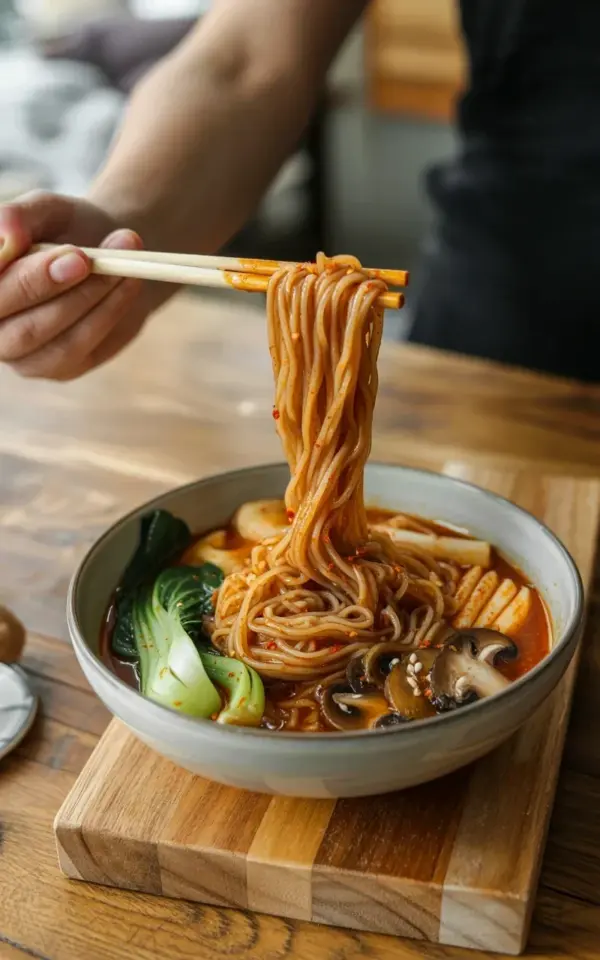
The bowl I made had everything I wanted it to have. There was a hand pulling up those glossy strands, thick with a vivid orange-red sauce that looked almost too bright to be real. Sliced mushrooms and baby bok choy were tucked into the corners, and a generous scattering of red chili flakes sat right on top. I ate it straight from the butcher block counter, no coaster, no manners, just a chopstick grip and a lot of napkins.
Why Glass Noodles Deserve a Soup Comeback
Look, I love a good wheat noodle as much as anyone. But there is something about sweet potato glass noodles in a hot broth that just hits differently in the winter. They are chewy, slightly bouncy, and they have this remarkable ability to hold onto sauce without turning into a mushy mess. That texture is why they are a staple in Korean cooking, and honestly, they do not get enough time in the spotlight outside of japchae.
When those noodles sit in a spicy, garlicky broth, they soak up the flavor but keep their own personality. They are also naturally gluten-free, which makes this bowl a solid choice if you are cooking for someone who avoids wheat. Not that I care much about that on a freezing Tuesday night, but it is a nice bonus.
Here is the thing about glass noodles in soup: they cook incredibly fast. Like, dangerously fast if you blink. You have to treat them with respect and a timer, or you will end up with a bowl of glue.
The Broth: Going Beyond Just Gochujang
Most people think the entire spicy flavor in Korean food comes from gochujang, the fermented chili paste. That is only half the story. A truly great spicy noodle soup needs depth, the kind you get from a base of anchovy and kelp stock or a heavy hit of toasted sesame oil. The gochujang gives you that fermented, slightly sweet backbone, but you need something sharp and fresh to cut through it.
I always build my broth with a base of garlic, ginger, and a little bit of gochugaru, the coarse Korean chili flakes. The flakes are the secret here. They rehydrate in the broth and release a fruity, smoky heat that is completely different from ground cayenne. Ground cayenne just burns. Gochugaru actually tastes like something.
To balance the heat, I add a splash of soy sauce and a tiny drizzle of honey or brown sugar. It is not a dessert broth by any means, but that little bit of sweetness is what makes the spice addictive instead of overwhelming. And if you have an anchovy stock in your freezer, use it. It will change your life. Ok, maybe not your life, but definitely your soup.
Gochugaru Is the Soul of the Heat
Choosing the right gochugaru is honestly a game changer. I have bought bags from the Asian market that were incredible, and I have bought the stuff in a pinch from a generic grocery store that was basically just red dust with no flavor. The good stuff is coarse, a little bit shiny with its natural oils, and it smells slightly smoky with a sweet undertone.
If you are new to cooking Korean food, do not skip this ingredient. There is no real substitute. You can absolutely make this soup without it, but it will taste like a pale imitation of what it should be. The gochugaru is what makes the broth look like a glowing autumn sunset. It is what gives that red tint to the noodles when you lift them out of the liquid.
For the perfect burn in my last batch, I used two heaping tablespoons. My tolerance is medium-high, so if you are more sensitive, start with one and taste as you go.
What Goes in the Bowl (and What to Skip)
I am a firm believer that this soup is a template, not a strict recipe. It is the perfect vehicle for whatever vegetables are sitting in your fridge looking sad. In the photo from last night, I used sliced shiitake mushrooms and baby bok choy because that is what I had on hand. Both are excellent choices that soak up the sauce well.
Here are some other options that work beautifully:
- Thinly sliced carrots and zucchini, added right at the end so they stay crunchy.
- Bean sprouts, which give a fresh, crisp contrast to the chewy noodles.
- Bite-sized tofu, fried until crispy and then dropped into the broth to absorb the sauce.
- Napa cabbage and enoki mushrooms for a more traditional Korean flavor profile.
- A soft boiled egg on the side. Not optional in my house.
I tend to skip heavy meats in this version because the broth is already so rich. But if you absolutely need protein, a few slices of thinly shaved beef work. You do not even need to marinate it, just let it cook briefly in the simmering liquid.
How to Make the Broth Taste Like It Simmered All Day
There is a trick to getting that deep, slow-cooked flavor without actually spending eight hours at the stove. The answer is garlic and sesame oil, and you have to use a generous hand with both. I start by heating a small pot, adding a glug of sesame oil, and then sautéing a large amount of crushed garlic and grated ginger until it is fragrant.
That moment, when the garlic hits the hot oil and the whole kitchen smells like a Korean restaurant, is the best part of the process. Then I add the gochugaru and let it bloom in the oil for about thirty seconds. This wakes up the chili and makes it more aromatic. After that, the stock, soy sauce, a little honey, and a piece of dried kelp if I have it.
The kelp makes the broth taste like it has been simmering for hours. It adds a natural, savory richness that is hard to describe. You just know it is there. Let everything simmer for about fifteen minutes, then pull the kelp out and discard it. That is it.
Serving This for a Weeknight (Lazy But Legit)
I know that not everyone has time to track down anchovy stock and specific chili flakes on a random Wednesday. That is okay. This soup still works with basic store-bought vegetable broth and a solid jar of gochujang from the international aisle. The flavor will be different, but it will still be delicious.
One of the things I love about this recipe is that it comes together faster than a takeout delivery. The noodles cook in about seven minutes. The broth comes together in about fifteen. You can have a restaurant-quality bowl of food on the table in under half an hour, which is pretty impressive for a Tuesday.
I also want to mention the texture of those noodles in the broth. They stay glossy and slippery, so you need a good grip with your chopsticks. In the photo, you can see that moment of tension, the noodles stretching upward, coated in that slick, red sauce. It looks messy, and honestly, it is. But that is exactly what you want.
There is something deeply satisfying about pulling up a single strand of glass noodle, watching the broth drip off it slowly, and seeing the chili flakes clinging to the surface. It is the kind of meal that demands you lean over the bowl and get completely invested. I had a stray droplet of red sauce on my counter for hours afterward, and I just let it sit there. It felt like proof of a good evening.
And if you have a batch of homemade kimchi that is getting a little too sour for snacking, stir a spoonful into the broth right before serving. It brightens the whole thing up and gives it an extra tangy kick. I practically live on kimchi during the colder months, so this was an easy call for me.
The last thing I will say is this: don’t be afraid of the spice level. You can dial it up or down depending on your mood. The chili flakes add the perfect burn, but they are not brutal. They are warm, inviting, and honestly, they are exactly what winter calls for. It is the kind of meal that makes you forget how cold it is outside for a few perfect, delicious minutes.
If you are craving something spicy and warming this week, save this one for your next Korean food fix. It is simple to throw together, deeply comforting, and it will honestly make your whole kitchen smell amazing. Have you tried cooking with glass noodles before, or is this your first time? I would love to hear what you put in your bowl.
Leave a Comment