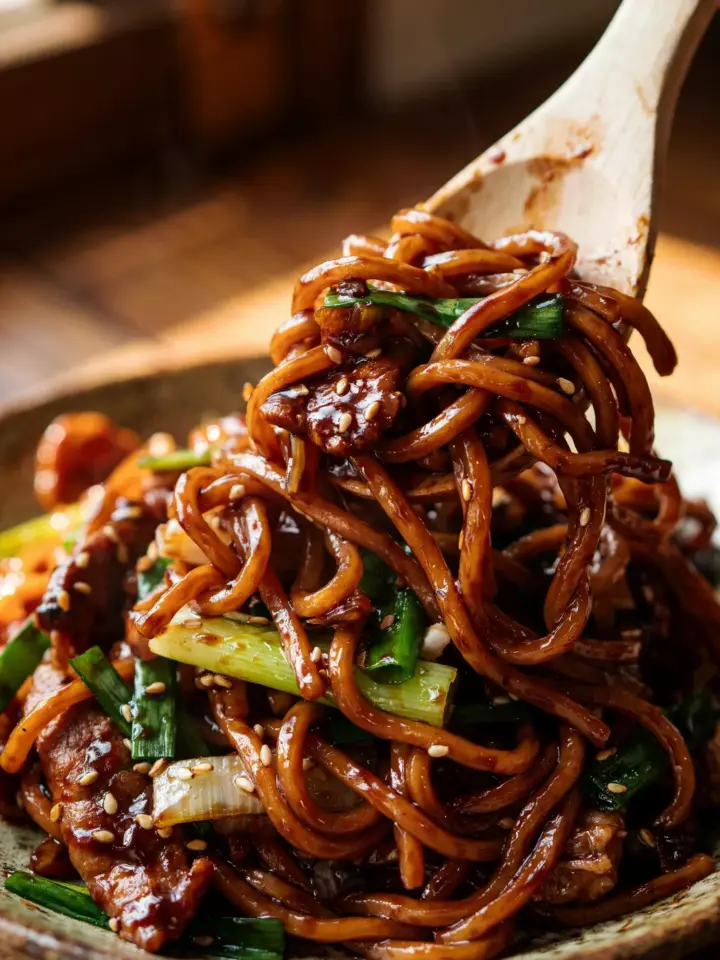
When a busy week leaves me with zero energy but a growling stomach, I turn to Shanghai Fried Noodles. This dish is my go-to quick stir-fry because it uses affordable pantry staples and comes together in under 20 minutes. The thick, chewy noodles soak up a savory sauce that feels indulgent without costing much. Best of all, it pairs beautifully with a side of kimchi for a Korean inspired meal, giving you two cuisines on one table for almost no extra work.
What Makes Shanghai Fried Noodles a Budget-Friendly Dinner Option
Many people assume that a satisfying noodle dish requires expensive cuts of meat or specialty sauces. That is not the case with this recipe. Shanghai Fried Noodles rely on a few basic ingredients: fresh thick noodles, a simple soy based sauce, and whatever vegetables you have on hand. I can make a hearty portion for two people for under five dollars, and often less.
The secret is to use affordable protein like sliced pork shoulder, chicken thighs, or even leftover cooked eggs. You can skip the meat entirely and load up on cabbage, carrots, and mushrooms. These vegetables are cheap year round and add plenty of texture. By sticking to budget friendly choices, you avoid the need for expensive restaurant delivery while still enjoying a deeply flavorful meal.
Key Ingredients You Already Have (or Can Afford)
When I plan this stir-fry, I check my fridge for a few core items. You might already have most of them:
- Fresh thick Shanghai style noodles (usually $2-3 per pack at Asian markets or regular grocery stores)
- Soy sauce, dark soy sauce (if available), and a bit of sugar
- Garlic and ginger (both keep well and cost pennies per use)
- Onion and green cabbage (among the cheapest vegetables in any store)
- Neutral oil like canola or vegetable oil
If you want a protein boost, pick up a pack of firm tofu, a few eggs, or a small piece of pork shoulder. These ingredients rarely exceed a few dollars. The entire shopping list fits comfortably into a tight grocery budget, especially if you buy noodles and vegetables in bulk.
The Secret to Chewy Noodles Without Breaking the Bank
Getting that perfect chewy texture is easier than you think, and you do not need expensive fresh pasta. The real trick is to use the right kind of noodles and handle them properly. I always buy fresh thick noodles from the refrigerated section of an Asian market. They cost roughly the same as dried spaghetti but deliver a bouncier bite.
If fresh noodles are not available, dried udon noodles are a superb backup. They are thick, chewy, and very affordable. Just cook them according to the package directions, then rinse under cold water to stop the cooking. This method keeps them from turning mushy during the stir-fry. The key is to undercook them by about one minute, because they will continue to cook in the hot pan.
My Step-by-Step Quick Stir-Fry Method
Here is the method I use again and again. It works every time and saves me from overthinking dinner.
First, prepare your sauce in a small bowl: two tablespoons of soy sauce, one tablespoon of dark soy sauce (or use all regular soy with a pinch of sugar), one teaspoon of sugar, and two tablespoons of water. Stir until the sugar dissolves. Then, heat your wok or large skillet over high heat with a tablespoon of oil.
Add the aromatics (minced garlic and ginger) and cook for 15 seconds. Throw in your sliced onion and cabbage, plus any protein you are using. Stir-fry for about two minutes until slightly softened. Then add the cooked noodles and pour the sauce over everything. Toss constantly with tongs for another minute until the noodles are coated and a little charred. That is it. No complicated steps, just fast cooking on high heat.
Don’t Overcook Your Veggies: A Simple Rule
One of the most common mistakes is leaving vegetables in the pan too long. Overcooked cabbage turns limp and watery, diluting the sauce. I learned to keep the vegetables crisp by following a simple rule: remove them from the heat while they still have a slight crunch.
When you add the vegetables, they only need about 90 seconds of high heat stirring. Once they turn bright and begin to soften, that is your cue to toss in the noodles and sauce. Even after the noodles are added, the total stir-fry time is only four minutes total. Your vegetables will retain their shape and texture, giving the dish a fresh, lively feel. This also keeps the meal lighter and more satisfying.
How to Pair with Kimchi for a Korean Twist
I love serving these noodles with a small bowl of store bought kimchi on the side. The spicy, tangy fermented cabbage cuts through the rich savory sauce and adds a completely different layer of flavor. This combination is my favorite way to turn a simple Chinese style stir-fry into a Korean inspired fusion meal.
Best of all, kimchi is incredibly budget friendly. A jar costs around three to four dollars and lasts for weeks in the fridge. Just a few spoonfuls per serving is enough to transform the whole dish. If you want to go a step further, sprinkle some toasted sesame seeds on the noodles and drizzle a little sesame oil over the kimchi. The result feels like a special dinner without any extra effort or expense.
More Budget-Friendly Noodle Tips
Over time I have collected a few small habits that keep my noodle dinners affordable and low stress:
- Buy noodles in bulk when they are on sale. You can freeze fresh noodles for up to three months.
- Use leftover vegetables from earlier in the week. Bell peppers, bok choy, and even zucchini work well.
- Substitute protein with a beaten egg scrambled into the noodles at the end. It costs about 20 cents.
- Save the sauce from a previous stir-fry batch. It keeps for a week in the fridge and speeds up the next meal.
These small actions add up. I rarely need to run to the store specially for this recipe. With a stocked pantry and a few fresh basics, I can always make a quick, satisfying stir-fry that respects both my time and my wallet.
I hope this guide gives you the confidence to whip up Shanghai Fried Noodles on your busiest nights. The combination of chewy noodles, crisp vegetables, and a savory sauce is genuinely hard to beat. Try it with a side of kimchi, and you will see why this has become my weekday staple. Save this recipe for your next noodle craving and make dinner simple again.
#ShanghaiFriedNoodles #EasyChineseRecipe #NoodleLover #KoreanFood #QuickStirFry
Leave a Comment