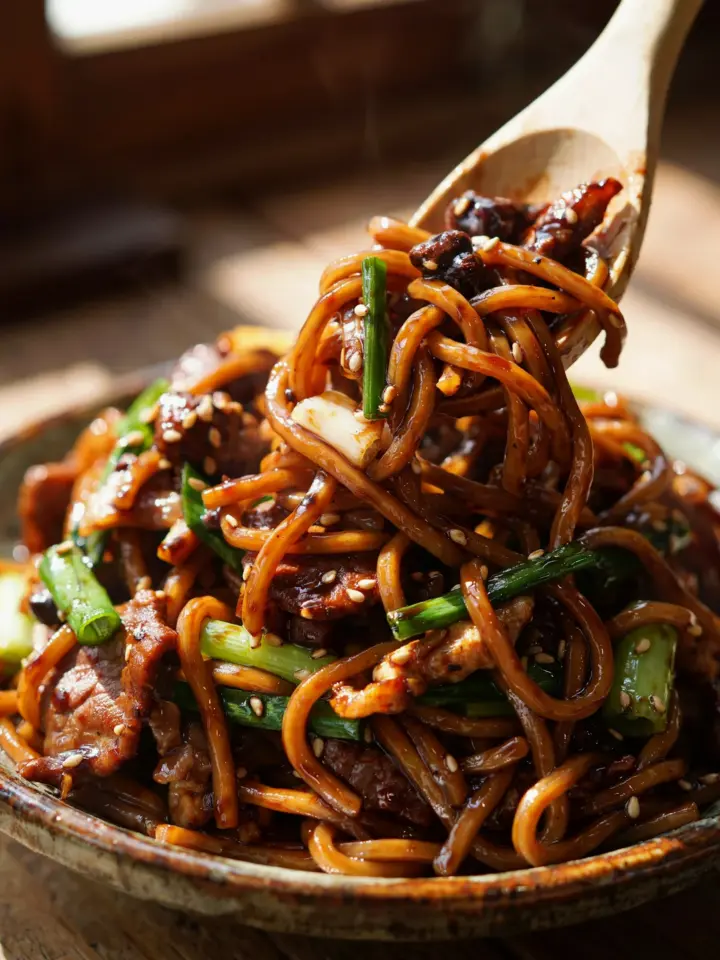
If you have ever tried making Shanghai Fried Noodles at home only to end up with a sticky, bland, or clumpy mess, you are not alone. This dish looks simple on paper, but small missteps turn chewy noodles into a frustrating disaster. I have made every mistake in the book, and I am here to help you skip them. Today we are focusing on a quick Korean fusion version that adds a gentle kick of gochugaru. By learning what goes wrong and how to fix it, you will pull together a bowl of glossy, savory noodles in under 20 minutes.
Why Your Shanghai Fried Noodles Turn Out Soggy
The most common complaint I hear is that the noodles come out waterlogged. The culprit is almost always boiling them too long or not draining them properly. Shanghai style noodles are thick and wheaty, and they need just 3 to 4 minutes in boiling water. Cook them until they are still slightly firm in the center because they will finish cooking in the hot wok.
Once drained, rinse them under cold running water for a few seconds. This stops the cooking and washes away excess surface starch that causes clumping. After rinsing, toss them with a teaspoon of neutral oil. An oiled noodle will not stick to itself or to the pan when you stir fry.
- Boil noodles for 3 minutes maximum (check package directions but err on the underdone side).
- Rinse immediately with cold water.
- Drizzle with a little oil and toss by hand.
If you skip the oil toss, you are inviting a sticky tangle. Trust me, I learned this the hard way after scraping a cement like lump out of my wok.
The Secret to Chewy Noodles That Don’t Clump
Even after oiling, some home cooks still end up with a noodle brick. The problem often lies in the pan temperature and the order of ingredients. You must sear the noodles alone first before adding anything else. Heat your wok or large skillet over high heat, add a little oil, and then spread the noodles in a single layer. Let them sit untouched for 30 seconds to develop a light char. Then flip and repeat.
This dry sear firms up the noodle exterior, so they stay separate and bouncy even after you add sauce. Do not crowd the pan. If you are doubling the recipe, cook the noodles in two batches. Overcrowding drops the temperature and steams the noodles instead of frying them. Steamed noodles = limp noodles.
Also, use fresh or frozen Shanghai style noodles if you can. Dried versions work but require a longer soak and never get that same satisfying chew. Look for the thick, round, white noodles in the refrigerated section of an Asian market.
Balancing Soy Sauce and Gochugaru Without Overpowering
This recipe is a fusion between the classic savory soy base and a Korean spice twist. The mistake people make is adding gochugaru directly into the sauce without blooming it first. Raw gochugaru (Korean red pepper flakes) can taste gritty and dusty. Instead, bloom it in a little hot oil for about 15 seconds before you add the noodles. This wakes up the smoky, fruity notes and mellows the raw heat.
For the soy element, use a mix of light soy sauce and a splash of dark soy sauce. Dark soy adds color and a hint of sweetness. If you use only light soy, the noodles will look pale and taste one dimensionally salty. I do a ratio of two tablespoons light soy to one tablespoon dark soy for every 8 ounces of noodles. Then add half a teaspoon of sugar to round out the saltiness. Taste your sauce before adding it to the pan. It should be savory with a gentle warmth, not fiery or puckering.
- Bloom gochugaru (1 to 2 teaspoons) in hot oil for 15 seconds.
- Combine light and dark soy sauce plus a pinch of sugar.
- Always taste the raw sauce before cooking.
If you want the dish to be spicy but not overwhelming, start with one teaspoon of gochugaru. You can always add more at the table with a sprinkle on top.
How to Prep Vegetables So They Stay Crisp
Another common mistake is cutting vegetables into uneven pieces or cooking them too long. For Shanghai fried noodles, you want thin, uniform strips that can cook in about two minutes. Slice bell peppers, carrots, and onion into matchsticks. If you use cabbage, shred it thinly. These vegetables should retain a bite, not turn into mushy rags.
Stir fry them separately from the noodles for best results. Heat a little oil, toss in the vegetables, and stir fry for 60 to 90 seconds until bright and slightly tender. Remove them from the wok, then cook the noodles and sauce. Return the vegetables at
#ShanghaiFriedNoodles #KoreanCooking #NoodleRecipes #EasyDinner #FusionFood
Leave a Comment