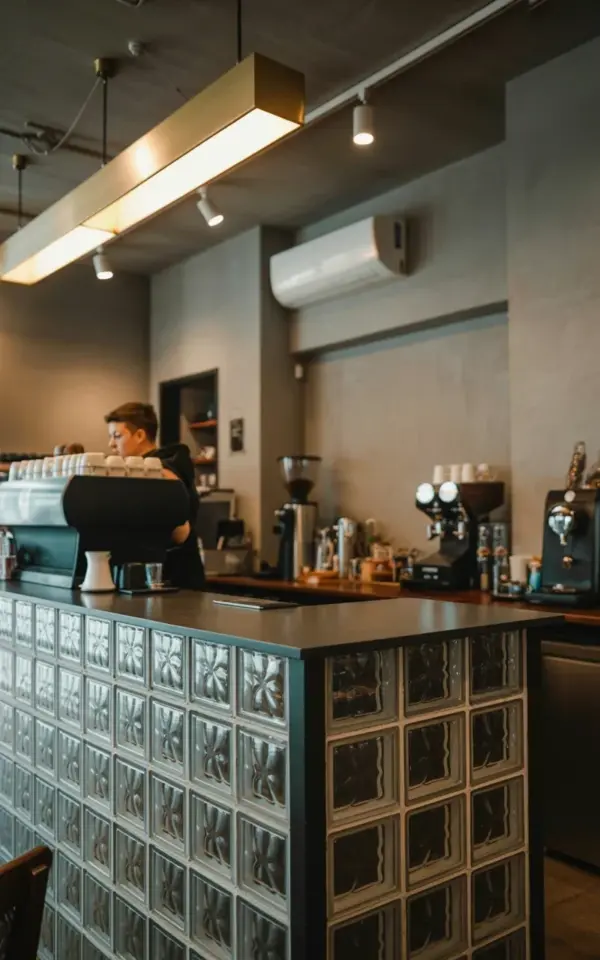
A glowing glass block counter is one of those design moves that sounds like a relic from a 1980s mall, but in the right setting, it completely transforms a room. This modern coffee shop proves that point with a textured block counter that lights up from within, paired with a dark gray top and raw concrete walls. If you’ve been circling coffeeshopinterior ideas that don’t rely on a ton of extra decor, this is a case study worth saving. The whole effect is built on contrast, light, and a few very deliberate material choices.
Glass block has a bad reputation in some circles, and honestly, I get it. Cheap versions look cloudy and dated. But when you back them with warm LED strips and top them with a heavy, matte surface, they stop feeling retro and start feeling architectural. Here’s how this cafe pulls it off, and how you can borrow the idea for your own space.
Why a Glass Block Counter Works as a Focal Point
The counter extends along the left side of the room, acting as the main visual anchor without screaming for attention. Because the blocks are illuminated from within, the counter creates a soft glow that draws the eye immediately. You don’t need artwork, signage, or decorative shelving when the counter itself does all the heavy lifting.
What I love is that the internal lighting does double duty. It highlights the texture of the glass, so the surface feels dimensional rather than flat, and it casts a gentle light across the floor. For a small cafe, that means you can skip several accent lights and still get a warm, inviting atmosphere. The illuminated blocks also photograph well, which is never a bad thing for your customers’ Instagram stories.
Pairing a Dark Top With Glowing Glass Blocks
A glossy white or bright wood top would have ruined the whole industrial mood here. The dark gray surface grounds the glowing glass and keeps the look mature. It also hides fingerprints, coffee drips, and the general wear and tear that any busy counter will see by noon.
If you’re speccing this for your own build, go for a matte finish, not polished. A little texture on the top surface adds grip and reduces glare, which matters when people are resting their elbows on it while waiting for a pour-over. Dark quartz or a sealed concrete top would both work well. Just avoid anything too fragile, because cafe counters take a beating.
Warm Lighting Against Raw Concrete Walls
There’s a white air conditioning unit mounted on the concrete wall above the counter, and it’s not exactly pretty. But here’s the thing: the warm gold pendant light distracts from it almost completely. A long rectangular gold fixture hangs overhead, casting a warm pool of light over the counter and the barista station.
This is the trick with industrial interiors. Concrete walls and exposed ceilings can feel cold, so you need warm, direct lighting to balance them out. The gold pendant does that effortlessly. It adds a hint of refinement to an otherwise rugged space. If you’re working with a landlord who won’t let you touch the AC unit, a warm light source right beneath it can soften the visual noise. Not completely hide it, but soften it.
Mixing Industrial Surfaces With Warm Metal Accents
You don’t have to commit fully to a concrete and glass aesthetic for this to work. The wooden counter behind the glass block, holding all the coffee equipment and supplies, is a natural element that keeps the space from feeling too severe. Wood introduces a layer of warmth that glass and concrete can’t produce on their own.
I’d suggest adding metal finishes that have some warmth to them, too. Brass, copper, or gold fixtures play beautifully against both the gray wall and the glowing blocks. Even something small, like gold drawer pulls or a brass faucet on the hand-wash sink, can tie the whole look together without much effort. This is the kind of cafe design where the mix feels intentional, not accidental.
Practical Tips for Getting the Lighting Right
The glass block counter’s glow comes from internal lighting, and this is where the details matter.
– Use warm white LEDs, around 2700K to 3000K, for a cozy glow. Cool white will ruin the mood.
– Install a dimmer switch so you can adjust the brightness as natural light changes.
– Make sure the LED strips are accessible for replacement. Glass blocks can be tricky to open, so plan for maintenance.
That third point is something people overlook. Once the blocks are sealed, swapping a dead LED is a nightmare. You don’t want to tear apart your freshly built counter because a cheap strip burned out in six months. Talk to your electrician about a hidden access panel or a removable top section.
How the Counter Reduces the Need for Extra Decor
Here’s the honest appeal of this design approach: it saves you money elsewhere. Because the glass block counter acts as a built-in light fixture, you can skip wall sconces, table lamps, and artwork in that part of the room. The cafe looks complete without cluttering the visual field. I can’t name one other commercial interior trend that pulls off “less is more” this effectively.
The exposed track on the ceiling also does a lot of work in this particular space. It adds an unfinished, utilitarian feel that makes the polished elements look even more deliberate. If you’re on a budget, expose the ceiling, paint it dark, and let the lighting be the hero. The contrast between the rough ceiling and the glowing counter will feel like a creative choice, not a cost-cutting one. Honestly, it’s sort of genius.
Recreating This Look Without a Full Renovation
You would think this style requires a complete build-out, but there are cheaper ways to get close. If tearing out your current counter is out of the question, you can overlay a glass block panel on the front of an existing base cabinet. Just make sure the surface behind the blocks is clean and semi-reflective so the light bounces forward.
A less permanent option is using glass block look tiles, which are much lighter and easier to install than the real thing. They won’t have the same depth, but with proper backlighting, they get surprisingly close. Pair them with a dark countertop and a single gold pendant light, and you’ve captured about 80% of the effect for about 20% of the cost. Not bad for a weekend project.
The atmosphere in this cafe works because no single element tries too hard. The concrete wall is just there, the glass blocks glow calmly, and the pendant light does what it’s supposed to do. There’s a quiet confidence in the design that comes from trusting a few strong materials instead of layering on extras. Maybe that’s the takeaway here: choose your focal point, light it well, and let everything else stay out of the way.
If you’re planning a coffee shop interior refresh, try this combo before you buy another piece of wall art. You might find that the space already had everything it needed, it just needed the right glow. Save this idea to your coffee shop board and come back to it when you’re ready to commit to the blocks. Your customers will notice the difference, even if they can’t say why.
Leave a Comment