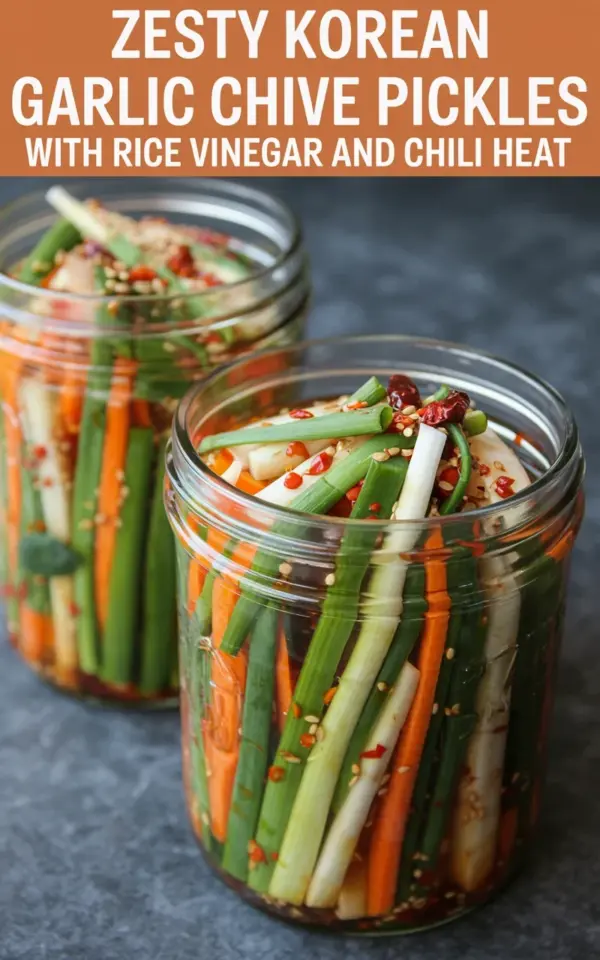
If you have never tried making Korean pickled vegetables at home, you are in for a treat. This easy fridge pickle recipe with daikon and chives delivers a bright, tangy crunch that keeps well for weeks. I keep a jar of these pickles in my refrigerator at all times. They add an instant punch to tacos, grain bowls, and grilled meats without any extra effort. The combination of white daikon radish slices, orange carrot strips, and green garlic chives looks beautiful in a glass mason jar, especially when topped with red chili flakes and white sesame seeds. Let me show you exactly how to make them.
Why Korean fridge pickles are perfect for meal prep
Fridge pickles, known as jangajji in Korean cooking, are a staple for anyone who wants to add flavor without spending hours in the kitchen. Unlike fermented kimchi, these pickles are ready in about an hour and do not require any special equipment. You simply slice your vegetables, pour a warm vinegar brine over them, and let the fridge do the work. The result is a crisp, tangy side dish that lasts for up to three weeks.
These pickles work especially well for meal prep because they taste better after a day or two. The flavors mellow and deepen, making them a reliable option for busy weeknights. I often make a double batch on Sunday and use them throughout the week on rice bowls, sandwiches, and even scrambled eggs.
Key ingredients for daikon radish and chive pickles
This recipe uses a short list of fresh vegetables and pantry staples. Here is what you need:
- Daikon radish – one medium root, peeled and sliced into thin half-moons or matchsticks. Daikon stays crunchy even after pickling.
- Carrots – one or two, cut into thin strips for color and sweetness.
- Green garlic chives – a generous handful, cut into 2-inch pieces. They add a mild garlic note.
- Rice vinegar – the base of the brine. It is milder than distilled vinegar and complements Korean flavors.
- Sugar and salt – for balance. I use white sugar and fine sea salt.
- Water – to dilute the acidity so the pickles are not too sharp.
- Red chili flakes (gochugaru) – for heat and a pop of color. Use Korean gochugaru if you have it.
- White sesame seeds – for garnish and nuttiness.
- Dried red chili peppers – optional, but they look lovely scattered on top in the jar.
You can find daikon and garlic chives at most Asian grocery stores or well-stocked supermarkets. If garlic chives are unavailable, use regular chives and add a minced garlic clove to the brine.
Step by step: how to make quick pickle Korean style
This process is straightforward, and you do not need any canning skills. Start by washing and preparing your vegetables. Peel the daikon and slice it into thin half-moons about an eighth of an inch thick. Peel the carrots and cut them into thin strips. Rinse the garlic chives and trim off any wilted ends.
Layer the vegetables in a clean glass mason jar. I like to alternate daikon, carrots, and chives so the jar looks as vibrant as the photo you see here. Sprinkle in about a tablespoon of gochugaru and a teaspoon of sesame seeds. Tuck a couple of dried red chili peppers against the glass for visual appeal.
Now make the brine. In a small saucepan, combine 1 cup of water, 1 cup of rice vinegar, 3 tablespoons of sugar, and 1 tablespoon of salt. Bring to a simmer over medium heat, stirring until the sugar and salt dissolve. Do not boil vigorously. Remove from heat and let it cool for two minutes.
Pour the warm brine over the vegetables in the jar, filling it to the top. Use a spoon to press down the vegetables so they are fully submerged. Screw on the lid and let the jar cool on the counter for about 30 minutes. Then transfer it to the refrigerator. You can eat the pickles after one hour, but they are best after 24 hours.
Tips for the perfect crunchy texture every time
The key to keeping your Korean pickled vegetables crisp is to avoid overprocessing. Daikon radish is naturally firm, but it can soften if you pour boiling brine directly onto it. I always let the brine cool for two to three minutes before pouring. That slight cooldown preserves the crunch.
Another trick is to salt the daikon slices lightly and let them sit for 10 minutes before adding them to the jar. Rinse and pat them dry first. This pulls out excess water and prevents the pickles from becoming watery. I do this only when I plan to keep the pickles for longer than two weeks. For a quick batch, you can skip this step.
Storage matters too. Always keep the jar refrigerated. The cold temperature slows down the softening process. Use clean utensils each time you fish out pickles to avoid introducing bacteria that could spoil the brine.
How to use Korean pickled vegetables in everyday meals
These pickles are incredibly versatile. I reach for them whenever a dish needs acidity or crunch. Here are a few easy ways to use them:
- Tuck them into Korean-style tacos with bulgogi beef or tofu, a drizzle of gochujang sauce, and fresh cilantro.
- Top a grain bowl with quinoa or rice, roasted sweet potatoes, avocado, and a generous scoop of these pickles.
- Add them to a simple lettuce wrap with grilled chicken and sesame oil for a low-carb lunch.
- Serve them alongside Korean fried chicken or japchae as a refreshing counterpoint.
- Chop them finely and mix into tuna salad or egg salad for extra tang and color.
Because the brine is mild and slightly sweet, these pickles do not overpower other ingredients. They work equally well in Asian-inspired dishes and Western ones like sandwiches or hot dogs.
Customizing your fridge pickle recipe with seasonal vegetables
Once you master the basic brine, you can adapt this recipe all year round. In spring, substitute asparagus or radishes for daikon. In summer, use cucumber slices and fresh dill for a hybrid Korean-dill pickle. In fall, try thinly sliced fennel or cabbage. The brine ratio of one part vinegar to one part water with three tablespoons of sugar per cup of liquid remains constant for most vegetables.
If you want a spicier pickle, add more gochugaru or a sliced fresh red chili. For a milder version, reduce the chili flakes to one teaspoon. You can also swap rice vinegar for apple cider vinegar, though the flavor will be a bit sharper. The sesame seeds are optional but add a nice visual touch. In the photo you saw, the white sesame seeds contrast beautifully with the red chili flakes and the green chives.
Just remember to keep the total volume of vegetables to about two cups per mason jar to allow room for the brine. Overcrowding leads to uneven pickling.
Frequently asked questions about quick Korean pickles
How long do these pickles last in the refrigerator? They stay fresh and crunchy for up to three weeks. After that, the texture softens, and the brine may start to cloud, which is a sign it is time to discard them.
Can I reuse the brine? I do not recommend reusing brine from these pickles because the vegetables release water and dilute the acidity. For food safety, make fresh brine for each new batch.
Do I need to sterilize the jars? Since these are fridge pickles, a thorough wash with hot soapy water is enough. No boiling or canning required.
Why are my pickles mushy? You likely used boiling brine or left the vegetables at room temperature too long. Always cool the brine slightly before pouring, and refrigerate within an hour.
If you have never cooked with daikon before, this recipe is a gentle introduction. Daikon absorbs the brine well while keeping a satisfying bite. Garlic chives add a subtle onion-garlic flavor that sets these pickles apart from standard refrigerator pickles.
Try this Korean pickled vegetables recipe this week
Making a jar of Korean pickled vegetables takes less than twenty minutes of active work. The flavor payoff is huge for such a small effort. I love pulling out a jar when friends come over unexpectedly because the pickles look so inviting with their orange, white, and green layers topped with chili flakes and sesame seeds. It is the kind of condiment that makes every meal feel a little more special.
Grab a daikon radish and a bunch of garlic chives on your next grocery trip. Give this fridge pickle recipe a try, and you will find yourself making it again and again. If you do, drop me a comment below to let me know how you used them. I am always looking for new ideas.
#KoreanPickledVegetables #FridgePickles #DaikonRadish #QuickPickle #KoreanFood
Leave a Comment