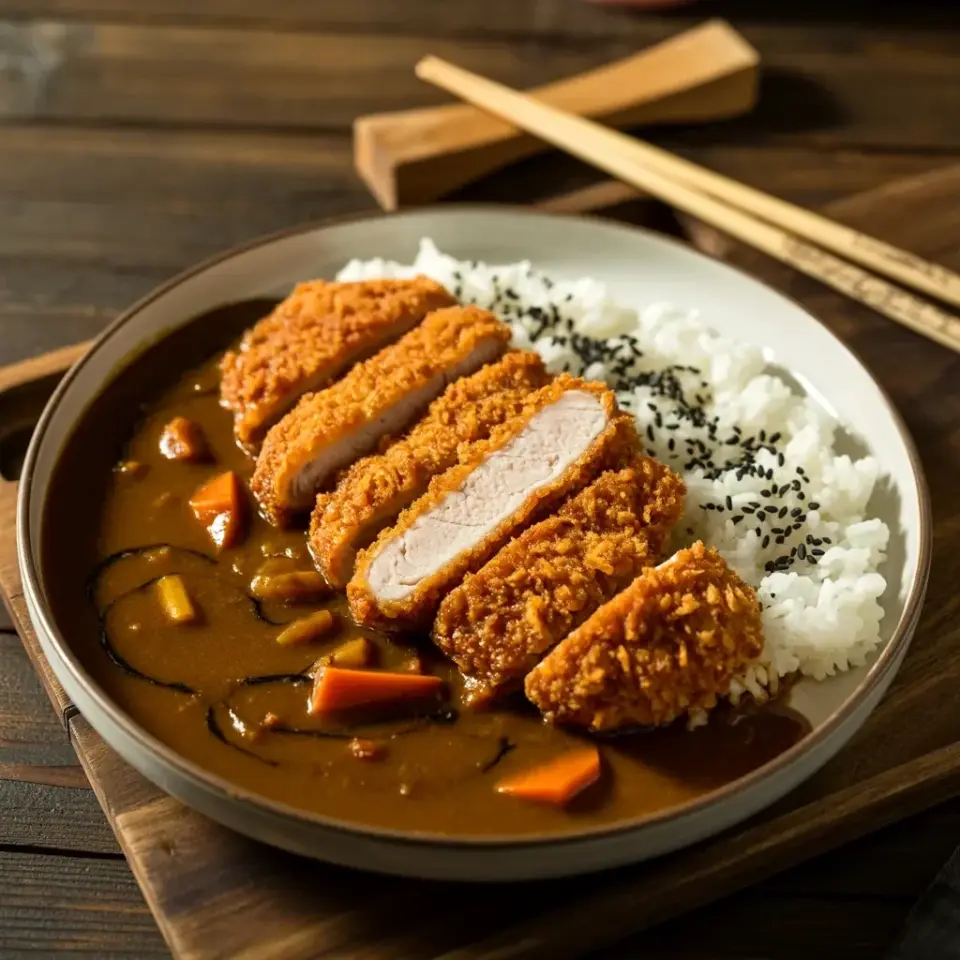
You slice into that tonkatsu and hear the crunch through the silence of your kitchen. The weather outside has turned sharp and dark, and this Japanese katsu curry is the exact thing you need. It is my go-to answer for a chilly night, a plate of crispy pork cutlet, fluffy rice, and glossy sauce that brings everything together.
This version hits every note you want from a cozy fall meal. The cutlet is cut into three thick pieces in the photo, showing off that golden brown crust. The white rice underneath has a scattering of black sesame seeds, and the dark, glossy curry sauce is studded with visible chunks of carrot. It is a practical, honest meal that warms you from the inside out.
Why this is the ultimate comfort food for cold weather
There is something deeply calming about a plate of curry rice on a dark evening. The sauce is rich and thick, coating the back of a spoon like a warm blanket. It sits next to fluffy, steamed rice that absorbs every bit of flavor it touches.
But the real star is the pork cutlet. It brings a serious crunch that breaks through the velvety sauce, and honestly, that contrast is why this dish never gets old for me. The carrots in the curry are tender, not mushy, and they add a little sweetness that balances the savory depth.
This is not just a meal. It is a ritual for nights when you need to slow down and eat something that feels like an achievement.
The fluffy rice base that carries the whole plate
The rice underneath is not a side dish here; it is the foundation. I like to use a short grain variety, like sushi rice or koshihikari, because it clumps just slightly. That texture lets it pick up the curry sauce without turning into a sad, soupy mess.
Look, you can use any rice you have on hand, but the sticky quality really matters. If the rice is too dry, it falls apart under the weight of the sauce. If it is too wet, it becomes a sticky paste.
For the black sesame seeds on top, I just toast them in a dry pan for a minute before sprinkling. It is a tiny step but it adds a nutty flavor and that visual pop you see in the photo.
Here is a quick checklist for the rice:
– Rinse the rice thoroughly until the water runs clear.
– Let it rest for 15 minutes before cooking.
– Use slightly less water than you think you need.
– Let it steam, undisturbed, for 10 minutes after cooking.
Get that right, and you are already halfway to a perfect curry night.
The crispy pork cutlet is a solo project
You need to treat the pork cutlet with respect. I use a boneless pork loin chop, about a thumb thick, and I pound it gently to even it out. Do not beat it to death; you just want a uniform thickness so it cooks evenly.
The breading is where the magic happens. Flour, beaten egg, and panko breadcrumbs are the classic trio. The panko is non-negotiable for me because it creates those shaggy, crunchy edges that turn so golden brown in the pan.
One thing I learned the hard way: let the breaded cutlet rest for five minutes before frying. It helps the coating stick to the meat, so you do not end up with a bald patch of pork floating in your curry.
Not gonna lie, frying in a shallow pan of oil can get messy. But the result, that crackling, craggy crust holding its own against the wet curry, is worth every bit of the clean up.
The curry sauce is a patient friend
The glossy, dark brown sauce in that photo is made from a roux, stock, onions, and carrots. I start with a base of grated onion and garlic because they melt into the sauce and give it a deep, sweet undertone.
You can use a store bought Japanese curry block, and I will not judge you for it. But if you have a little time, making a simple roux from butter, flour, curry powder, and a pinch of cocoa powder (trust me, just a pinch) adds an incredible depth.
The carrots go in early and simmer until they are tender enough to bite through easily. The sauce should be glossy, which means the roux is doing its job. It should coat the back of a spoon and be thick enough that it does not flood the entire plate.
A splash of apple juice or a teaspoon of honey at the end can brighten the whole pot. It is one of those small, weird tricks that makes the sauce taste more complex than it really is.
My honest notes on doing this faster
Ok so, if this is a weeknight, you can absolutely shorten the process. A pre-breaded cutlet from the freezer section works in a pinch, though it will not have that same shaggy crunch.
The curry roux can be made in bulk and kept in the fridge for a month. I do this all the time.
It feels good to have a container of homemade roux ready to go, because then the dish becomes mostly about the frying. For the chicken version, just skip the pork and use a chicken breast; no one is going to complain.
But here is the thing: if you have a chilly evening and you want to be cozy, the slow route is better. The process is the whole point. It gives you something to do while the wind rattles the windows.
A fall dinner worth the mess
This meal is everything I want when the days get shorter. It is hearty, but not heavy in a gross way. It is savory, with a little sweetness from the carrots and the sauce.
I always serve it on a white ceramic plate, like in the photo, because the dark brown curry and golden cutlet look beautiful against it. The contrast is part of the appeal.
I add a little pile of pickled ginger or fukujinzuke on the side, but that is optional. Honestly, the black sesame seeds and the wooden chopsticks on the table are enough. That is the scene I want on a cold night.
So, save this for your next cozy dinner plan. The crispy cutlet, the fluffy rice, and that glossy Japanese curry with carrots are waiting for you. Make a pot, make a mess, and enjoy every single bite.
Leave a Comment