Why This Budget Korean Popcorn Chicken Beats Takeout
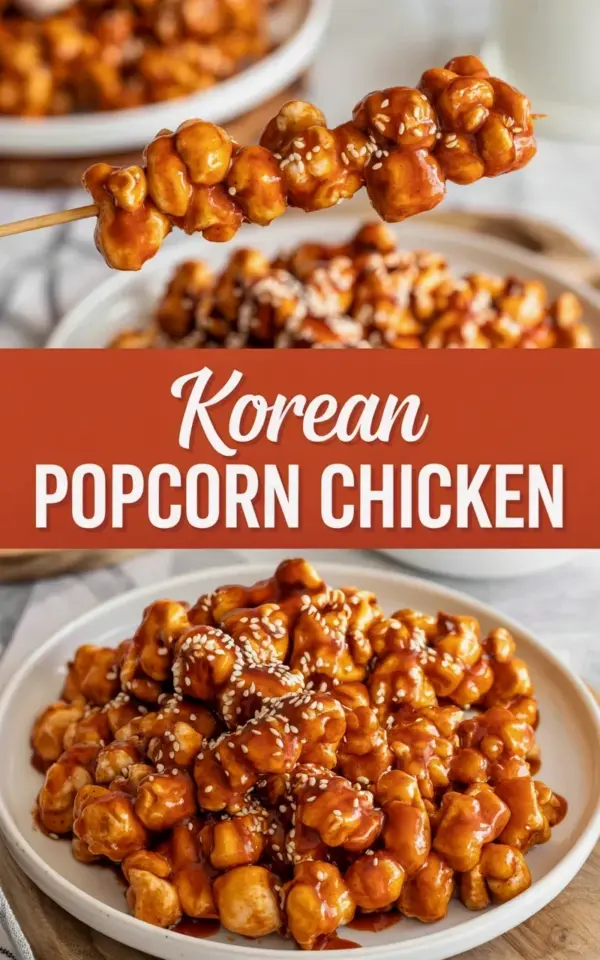
Ok so you’re staring at that photo above, the one with glossy orange chicken on a wooden skewer, and your wallet is feeling thin. That’s exactly the right moment for this budget Korean popcorn chicken recipe. Takeout costs fifteen bucks for a small box, but a whole batch of these sticky gochujang bites runs you maybe six, and honestly, it tastes fresher and hotter anyway.
The photo splits things into three scenes: one lone piece skewered, a crowded white plate, and a red-orange banner in between. I want you to imagine that plate sitting on your own counter. Those small chunks, every one coated in the same shiny sauce and speckled with sesame seeds, that’s what we’re making. No fancy equipment, no obscure ingredients, no deep fryer required.
Look, I’m not a trained chef. I’m just someone who loves Korean food and hates spending money on delivery. So I tested this at home until it worked with cheap chicken thighs and pantry staples. Here’s what I learned.
The Short Ingredient List for Sticky Gochujang Bites
You need two parts for this: the chicken coating and the sauce. For the chicken, grab about a pound and a half of boneless thighs. Thighs stay juicier than breasts when you fry them in small pieces, and they’re often cheaper per pound. You’ll also need potato starch (or cornstarch, if that’s what you have), one egg, salt, pepper, and a little oil for pan frying.
The sauce is where Korean popcorn chicken gets its personality. Gochujang is the red fermented chili paste that makes everything taste like a warm hug. A small tub costs around four dollars and lasts for months. You’ll also need:
- Gochujang, obviously, about two tablespoons
- Honey or brown sugar (honey makes it glossier, but sugar works)
- Soy sauce, one tablespoon, the regular kind is fine
- Rice vinegar or apple cider vinegar for that tiny sour kick
- Garlic, crushed, because garlic is non-negotiable
- Sesame seeds and sliced green onion for the top, though the seeds are the ones in the photo
That’s it. No mirin, no sake, no weird chili flakes. The whole sauce comes together in a small bowl while your chicken browns.
How to Cut and Coat Chicken for Crispy Popcorn Bites
Start by cutting the thighs into one inch chunks. Not bigger, honestly, because bigger pieces take longer to cook and the sauce makes them soggy on the outside before the middle is done. One inch is about the size of a grape or a slightly squished ping pong ball. I know that sounds weird, but it helps.
Now here’s a trick I stole from Korean fried chicken recipes: double coat but keep it thin. Toss the pieces in a little salt and pepper, then add one beaten egg and a generous half cup of potato starch. Mix with your hands until every chunk looks dusty and dry. Let it sit for five minutes. This gives the starch time to hydrate, so the crust gets craggy and crunchy instead of slick and shiny.
Heat a shallow layer of oil in a heavy pan. You want maybe half an inch, not full deep frying. When a pinch of starch sizzles on contact, lay the chicken in with space between pieces. Let them cook untouched for three minutes, then flip. Small pieces go fast, so after another three minutes they should be golden brown and cooked through. Remove them to a rack, not paper towels on a flat plate. A rack keeps the bottoms crispy.
And here’s the mildly annoying detail nobody tells you: the first batch always gets eaten before the sauce is ready. Plan for that, or you’ll run out of chicken to coat.
Making the Sticky Gochujang Sauce From Scratch
While the chicken rests, whisk together two tablespoons gochujang, one tablespoon honey, one tablespoon soy sauce, one teaspoon vinegar, and one crushed garlic clove. That’s the whole recipe. Gochujang is salty and powerful, so you don’t need much else.
Put the sauce in a cold pan first, then turn the heat to low. Stir it constantly for about a minute. You’ll see it bubble and turn darker, like it’s waking up. Right when it clings to your spoon in a slow ribbon, that’s your moment. Toss the fried chicken into the pan and stir fast with a spatula.
The sauce should stick to every nook and cranny, but it won’t look like the photo yet. That glossy, almost lacquered finish comes from letting the sauce reduce around the chicken for another thirty seconds. Don’t walk away. Burned gochujang tastes bitter and ruins the whole batch. I’ve done it, and the smoke alarm will confirm your failure.
One more thing: keep the heat low. Too high and the honey caramelizes into hard candy bits. You want sauce that drips slowly, not crunchy sugar shards.
Skewering and Serving Like the Photo Shows
The white plate in the picture isn’t fancy. It’s just a plain ceramic plate, the kind you already own. Pile the glazed chicken in the middle so it forms a small mountain. Then grab a handful of white sesame seeds and sprinkle them with your fingers from high up, so they scatter evenly instead of clumping in one spot.
Those wooden skewers are only for the look. Push one piece onto a skewer for a single serving, or thread two or three pieces if you want the top image effect. It’s not practical for eating, honestly. Skewers are there for photographs and party appearances, not for making dinner easier. Serve the rest in a bowl and hand out forks.
If you want to match the photo exactly, let some of the sauce pool at the edge of the plate. That sticky red puddle is what makes people’s mouths water. Add a few slices of green onion on the side, but don’t bury the chicken. You bought the sesame seeds for a reason.
Pair this with plain steamed rice. The rice soaks up the leftover sauce and makes the meal feel like a real Korean dinner. Or stuff it into lettuce wraps and call it a low carb night. Your call.
Easy Swaps and Storage Tips for Leftovers
Not in the mood to fry? You can bake the coated chunks at 425°F for about twenty minutes, flipping halfway, but they won’t be as crunchy. The sauce will still taste great. You can also use chicken breast if you prefer, just cut them a bit smaller and don’t overcook. Overcooked breast pieces turn into dry little pebbles.
Leftovers keep in the fridge for two days max. Reheat them in a pan over medium heat with a splash of water. Microwave works, but the crust gets chewy and the sauce thins out. Honestly, this is one of those things that’s best eaten immediately, so make less if you’re cooking for one.
And if you’re wondering about the gochujang left in the tub, use it for future nights. Mix it with mayonnaise for a quick dipping sauce, or stir a spoonful into soup broth for instant depth. It never goes bad in my house, because I keep finding excuses.
So that’s the whole process, from cheap chicken thighs to a plate of sticky, sesame covered popcorn chicken that looks like it came from a Korean street stall. The photo has one piece on a skewer, a full plate below it, and a bright banner between them. You can recreate all of it tonight without spending much money. Save this recipe for your next Korean cooking night, and trust me, once you try it, takeout is going to have a hard time winning you back.
Leave a Comment