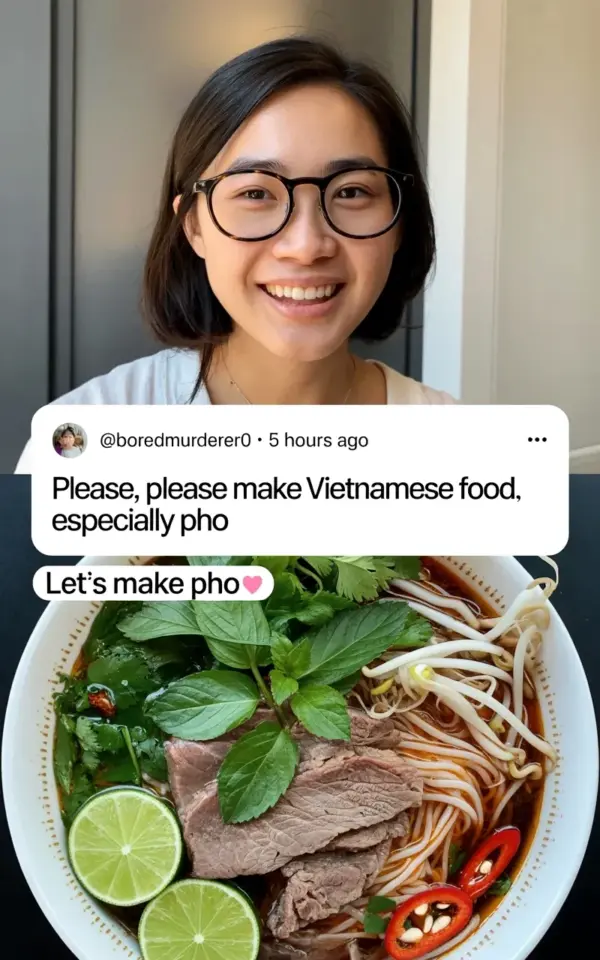
There is a moment, right after you place a pho order at a restaurant, when the bowl arrives and you are hit with that steam that smells like star anise and onions. It is pure comfort, but the bill is usually around fifteen bucks. Look, I love that experience, but I have a confession to make. I have been recreating that exact feeling in my own kitchen for about four dollars a bowl, and this budget-friendly pho recipe is the reason my wallet is still intact this winter. That social media photo going around, the one with the girl in the black-rimmed glasses grinning next to a gorgeous bowl of noodles, that is exactly what we are talking about here. It is achievable, it is cheap, and it is deeply satisfying.
This is not a weekend-long project that requires a pho master’s touch. I am going to show you how to get a deeply flavored broth using regular supermarket ingredients and a few shortcuts that I actually stand behind. The “authentic” process is beautiful, but it is also a time commitment that many of us simply do not have on a Tuesday. My version leans into richness through a simple oven-roasting step and a short list of aromatics. Honestly, the result is so good that I have stopped ordering out for beef pho entirely.
Why the Oven Makes Your Pho Broth Better
The secret to a legit broth is charring your onions and ginger. Most recipes tell you to do this over an open flame, which is great if you have a gas stove and the patience of a saint. I do not have that patience. I also do not want to stand over a burner while my kitchen fills with smoke. So here is my workaround: I toss halved onions, a knob of ginger, and even the beef bones onto a sheet pan and blast them under the broiler. Ten minutes, they get those beautiful blackened spots, and your kitchen smells like a restaurant.
This step does double duty. It adds a smoky depth that you would normally get from hours of simmering, and it also makes the broth look that dark, clear amber color you see in the photo. It is honestly the single most important thing to do if you want a non-weak tasting broth. Take the extra ten minutes, you will not regret it.
The Cheap Cuts of Beef That Actually Work
Let’s talk about the meat, because this is where you save the most money. If you buy pre-sliced “pho beef” from the butcher, you are paying a massive markup. Instead, look for beef chuck or a boneless beef shank. These are heavily marbled cuts that break down beautifully during simmering, flavoring the broth as they cook. I usually buy a little over a pound, and it feeds four people generously.
The best part is that you do not need to slice the meat paper thin before cooking it, which is a huge pain. Just cut it into large chunks, let them simmer until tender, and then pull them out to rest. When you are ready to serve, slice them as thinly as you can manage. You will not get that almost transparent raw sirloin that cooks in the hot broth, but the flavor from the braised chuck is honestly richer.
How to Fake a Long-Simmered Broth in a Fraction of the Time
Ok so, here is the big argument people have about pho: how long should you simmer the broth? Traditionalists will tell you twelve hours. My mantra is that we are aiming for “damn good,” not “reincarnated ancestral recipe handed down through generations.” We are going to simmer for a solid two hours. Check the clock. That is completely manageable while you do laundry.
The trick is to pack the pot with flavor and then let it do its thing. You will toast your spices, which wakes up the star anise, cinnamon, and cloves. Then everything goes into the pot: the charred aromatics, the meat, a splash of fish sauce, and some rock sugar. I use apple juice as a secret sweetener sometimes, just a quarter cup, because it adds a mellow sweetness that rounds out the savory notes without making it syrupy. It is a little weird, but it works.
After two hours, skim the fat off the top, add salt, and taste. That is when you adjust. Need more salt? More fish sauce? A tiny squeeze of lime right in the pot? Do it. You are looking for a broth that is bold enough to stand up to the noodles and herbs later.
Choosing the Right Noodles and Getting Them Right
Do not overthink the noodles. In a standard grocery store, you are looking for “banh pho” or simply “rice noodle sticks” in the Asian foods aisle. They come in a flat, white dried package. They are cheap, usually under two dollars, and they cook in a matter of minutes. The key is to soak them in hot water until they are pliable but still firm to the tooth.
I have a specific way of doing this that avoids the sticky-soap mess. I use a large pot of boiling water, turn off the heat, and then add the noodles. Let them sit for about five to seven minutes. You want them tender, but not mushy. Rinse them briefly in cold water and toss with a little oil to keep them from clumping. This matters, because if you leave them sitting in the strainer, they turn into a solid, inedible brick. We all know that pain.
Building the Perfect Bowl, A Visual Guide
There is a Zen to bowl assembly. The photo of the pho in the description shows the garnishes arranged around the edge like an edible sunset, and honestly, that is half the appeal. This might sound fussy, but taking one minute to place the herbs neatly actually makes you eat slower and enjoy it more.
Start with a pile of noodles in the bottom of the bowl. Lay your sliced beef and brisket chunks over the top. Now, for the fun part, the toppings. You want a variety of colors and textures.
– A big handful of fresh cilantro and some mint leaves, torn not chopped
– A few wedges of lime for squeezing right before you eat
– A mound of fresh bean sprouts for that crunchy contrast
– One or two thin slices of red chili for heat (serrano works too if you want more bite)
Then, here is the part I always mess up if I am rushing: the broth has to be boiling hot. Not warm. Not simmering. Boiling. You pour it directly over the raw herbs and beef slices to cook the meat slightly and wake up all the aromatics. The hot liquid hitting the lime is a sensory experience that you absolutely need to try.
My Honest Take on Herbs and Fresh Toppings
You might be tempted to skip the mint if you do not have it. Please do not. The mint is not just a garnish, it is here to provide a cold, crisp counterpoint to the hot, savory broth. It feels like a breath of fresh air in the middle of a heavy, meaty bite. It is cheap, and it lasts in the fridge for a while if you wrap it in a damp paper towel.
Bean sprouts are another non-negotiable for me. They add a watery crunch that cuts through the rich soup. The photo perfectly captures that they are raw and fresh, not cooked into the soup. I always throw a few extra in my bowl because I love the texture. If they are not your thing, leave them out, but you are missing out on a crucial dynamic.
A Timely Tip for Leftovers and Batch Cooking
This soup is a winter miracle, but I also make it in early spring when I am still craving warmth but the weather is turning. It stores extremely well. I actually recommend keeping the broth separate from the noodles and the meat. That way, the noodles do not soak up all the liquid and turn into mush in your fridge.
When you are ready to eat the leftovers, reheat the broth rapidly on the stove and pour it over freshly soaked noodles. The meat can be reheated right in the broth. This makes it an unbelievable meal prep option. Make a huge batch on Sunday, and you have lunch ready for half of the week. It honestly tastes better on the second day because the spices have had time to really meld together.
So, if you are tired of spending money on lukewarm delivery soups, give this approach a try. You just need a stockpot, an hour of hands-on time, and a handful of cheap ingredients. Make it once, and you will realize that a stunning bowl of Vietnamese noodle soup is never as far away as you think. Save this one for your next rainy day, your next craving, or your next need for a seriously good, budget-friendly bowl of comfort. I would love to hear how your batch turns out.
Leave a Comment